
The Rolex Oyster Watch
It is probably the most famous quality watch there is, and its history is worth telling properly. Few brands have been so consistently associated with achievement, precision and durability — not just as marketing, but as genuine engineering substance backed by a series of remarkable real-world demonstrations. Here is the full story of how it got there.
Hans Wilsdorf and the Beginning
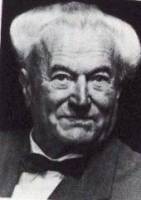
The Rolex brand began life not in Switzerland but in London, where Hans Wilsdorf and his brother-in-law Alfred Davis formed a company called Wilsdorf & Davis in 1905. Wilsdorf was Bavarian-born and had moved to England, where he recognised that the market for wristwatches — then an unusual product, most people still carrying pocket watches — was ready to be taken seriously. He reached an agreement with the Swiss movement maker Aegler, who produced movements small enough to fit into a case designed for wearing on the wrist, and set about finding a name for the product. He wanted something short, sharp and memorable — easy to pronounce in any language and short enough to fit on a dial. He invented the word Rolex.
The company obtained the first official chronometer certification ever awarded to a wristwatch in 1910, from the London Kew Observatory — then the world's most respected testing institution for precision timekeeping. By 1914, the same observatory had awarded the Rolex a class A precision certificate: the highest grade ever given to a wristwatch at that point. Wilsdorf then turned his attention to the next problem: the movement might be precise, but it was vulnerable. Dust and moisture entered the case through the winding crown and the case itself, causing premature wear and unreliability. This was the problem he spent the next decade solving.
The Oyster Case — the Wonder Watch
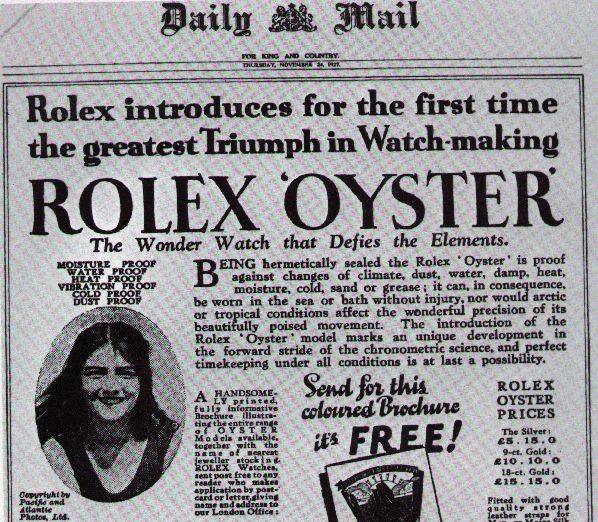
In 1926, Rolex developed and patented what they called the Oyster — the world's first truly waterproof wristwatch case. The solution used a threaded caseback and a threaded bezel, combined with a specially designed winding crown that screwed down onto the case, creating a hermetically sealed enclosure. It was a simple concept executed with precision manufacturing, and it worked.
Wilsdorf's genius was recognising that a technical achievement needs a demonstration as much as it needs a specification sheet. In 1927 he arranged for Mercedes Gleitze — the first British woman to swim the English Channel — to wear an Oyster around her neck during her crossing. After 15 hours and 15 minutes in the Channel, she emerged at Cap Gris-Nez with the Rolex still running perfectly. Wilsdorf purchased a full-page advertisement in the Daily Mail, ran alongside an account of the swim, and introduced the Oyster to the British public as the watch that had just crossed 26 miles of the English Channel without missing a beat. It was arguably the most effective product launch in watchmaking history.
Many publications will state that Rolex produced the world's first automatic wristwatch. There is enough evidence to disprove this — the self-winding mechanism was first invented by Abraham-Louis Perrelet in the eighteenth century, and several makers had produced automatic watches before Rolex. What Rolex did in 1931 was produce a reliable, practical self-winding mechanism called the Perpetual rotor: a half-circle weighted rotor swinging freely in both directions, winding the mainspring with the natural movement of the wearer's wrist. Combined with the sealed Oyster case, this produced a watch that needed no winding and needed no opening — the wearer simply wore it. It was a transformative combination, and the Rolex Oyster Perpetual established the template for almost all serious automatic wristwatches made since.
About 650,000 Rolex watches are produced each year — not enough to meet the ever-growing demand, but Rolex insist that quality, not quantity, comes first. Every watch leaving the factory bears the designation "Superlative Chronometer Officially Certified," which requires passing both COSC (Contrôle Officiel Suisse des Chronomètres) testing and a further in-house standard that is even stricter. Of all watch companies in the world, Rolex certifies more chronometers annually than any other.
The Professional Models
The major threat to Rolex — and to every other mechanical watchmaker — arrived in the 1970s with the quartz movement. Mass production of cheap but highly accurate quartz timepieces sent many quality watch manufacturers into liquidation. While rivals bit the dust, Rolex continued on its long-trodden path of mechanical quality and rode out the storm, helped considerably by being a private company with no shareholders demanding short-term profits.
What Rolex built during the 1950s and 1960s was a family of professional tool watches that have aged extraordinarily well, both as working instruments and as objects of desire:
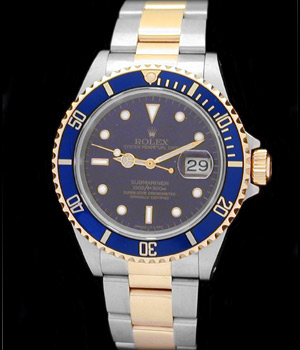
The Submariner, introduced in 1953, was the first watch guaranteed waterproof to 100 metres — designed for serious diving at a time when scuba diving was a new activity and depth gauges were attached to a diver's wrist. The rotating bezel with its 60-minute scale allowed a diver to set elapsed time at descent and read remaining air time with a glance. In 1953, Sir Edmund Hillary's expedition team wore Rolexes on the first ascent of Everest; the Submariner, built for water but equally reliable in extreme cold, established a reputation for going anywhere a wearer would want to go.
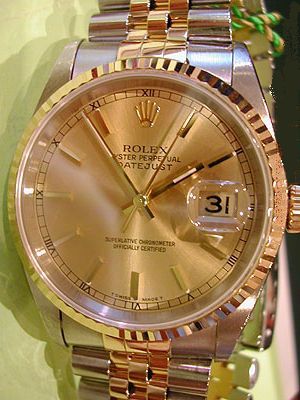
The Datejust, introduced in 1945 to mark the company's 40th anniversary, was the first wristwatch to display the date through a magnified aperture on the dial — the "Cyclops" lens, as it became known. The Datejust in its many dial and case combinations represents the accessible entry point to Rolex collecting and remains one of the most comfortable watches ever made for daily wear.
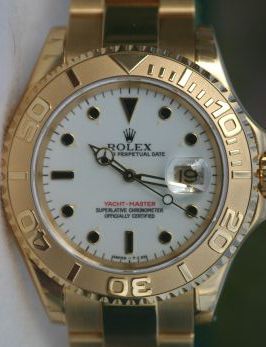
The GMT-Master, introduced 1955, was developed in collaboration with Pan American Airlines for their transatlantic pilots, who needed to track home time alongside local time during flights. A 24-hour hand on the same movement, combined with the famous two-colour "Pepsi" red-and-blue bezel, allowed a second time zone to be read simultaneously. The GMT-Master became the watch of the jet age.
The Sea-Dweller, introduced 1967, extended the Submariner concept for professional saturation divers working at depths where the Submariner's helium build-up would cause the crystal to pop — the Sea-Dweller included a helium escape valve, allowing mixed-gas divers to wear it during decompression.
Rolex Chronology
| Year | Event |
|---|---|
| 1905 | Hans Wilsdorf and Alfred Davis form Wilsdorf & Davis in London to produce wristwatches |
| 1908 | The Rolex name is registered |
| 1910 | Rolex receives the first official chronometer certification ever awarded to a wristwatch, from the Kew Observatory |
| 1914 | London's Kew Observatory awards Rolex a Class A precision certificate — the highest ever given to a wristwatch |
| 1919 | Wilsdorf moves the company to Geneva as Montres Rolex SA, escaping post-war British import duties on Swiss goods |
| 1926 | Rolex develops and patents the Oyster — the first truly waterproof and dustproof wristwatch case |
| 1927 | The Rolex Oyster crosses the English Channel on the wrist of swimmer Mercedes Gleitze; Wilsdorf runs a full-page advertisement in the Daily Mail the following morning |
| 1931 | The Perpetual self-winding rotor is introduced, producing the first practical automatic wristwatch |
| 1945 | The Oyster Datejust goes on sale — the first wristwatch with a date window |
| 1953 | The Submariner is introduced, guaranteed waterproof to 100m / 330ft. Hillary's Everest team wear Rolexes on the first ascent. |
| 1954 | The Oyster Perpetual Lady-Datejust goes on sale |
| 1955 | The GMT-Master is released, reading time in two time zones simultaneously. Developed in collaboration with Pan American Airlines. |
| 1956 | The Oyster Day-Date goes on sale — the first watch to display both the day and date written in full |
| 1960 | A bathyscaphe carries a specially made Rolex test watch 35,000 feet to the bottom of the Mariana Trench — and it survives |
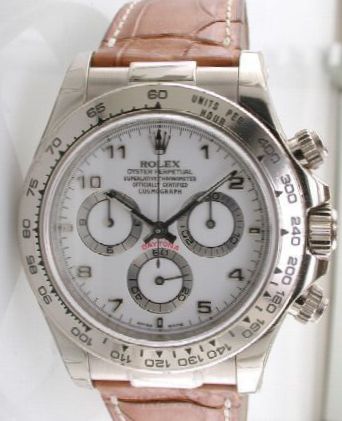
| 1963 | The Cosmograph Daytona is introduced — Rolex's chronograph for motorsport timing |
| 1967 | The Oyster Sea-Dweller is released, waterproof to 610m / 2,000ft with a helium escape valve for saturation divers |
| 1971 | The Oyster Explorer II is released |
| 1978 | The Sea-Dweller is tested waterproof to 1,220m / 4,000ft |
| 1988 | The Cosmograph Daytona is fitted with a Perpetual rotor — now fully automatic |
| 1992 | The Yacht-Master is introduced — a sports-luxury watch positioned above the Submariner |
| 2004 | The Submariner celebrates its 50th anniversary with a commemorative limited edition |
eBay Rolex Auctions
Search current eBay listings for Rolex watches: