
Pocket Watch Collecting for Profit & Pleasure
Although time-keeping mechanisms have been around for thousands of years, the first mobile clocks did not appear until the 1500s. Until that time, a clock's mechanism was so large, heavy and cumbersome that few people considered the possibility of a portable timepiece.
Most clocks were enormous and resided in churches or cathedrals. In the 1500s Henry De Vick invented a clock for the royal palace in Paris with a 500-pound weight that travelled 32 feet — and it only had an hour hand (as did all clocks in those days). A hand-held timepiece was a ridiculous thought at the time.
A Brief History of the Pocket Watch
Inventing the portable clock would bring great advances to civilisation. It was needed for the study of astronomy, physics, and for ship captains to calculate location. Although the Egyptians first used the sundial by 1300 BC, German locksmith Peter Henlein is one of the first recorded inventors to create a watch in the 1500s.
The first watches were made of steel. Watch-makers were originally locksmiths and blacksmiths because those guilds worked steel. Eventually locksmiths dominated the trade as brass, silver and gold replaced steel and miniaturisation swept the industry. At this time watches were typically four or five inches wide and about three inches thick.
It was the discovery of spring technology that made the personal timepiece possible. Spiral springs could be wound and uncoiled to move the hour hand. Although the technology was a great leap forward, it was still highly inaccurate because coiled springs don't unwind at a constant speed.
In 1675 several watchmakers discovered that a spiral spring attached to the balance greatly increased accuracy. Suddenly watches reflected the correct time within minutes rather than being off by close to an hour. This heralded the addition of the minute hand.
What Makes a Pocket Watch Valuable?
As with all collectibles, it's what the buyer is willing to pay. Key factors include:
- Maker — Waltham, Elgin, Hamilton, Patek Philippe and Rolex all command premiums.
- Condition — A watch in mint condition is worth significantly more than a worn example.
- Rarity — Limited production runs, unusual grades or unusual complications increase value.
- Case material — Solid gold and platinum cases carry intrinsic metal value on top of horological value.
- Movement quality — Jewel count, adjustment positions, and grade all matter.
- Provenance — A documented history (military issue, famous owner) adds value.
A Rare Early Waltham — Appleton Tracy & Co.
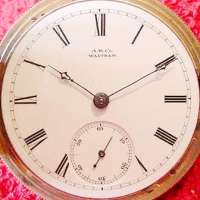
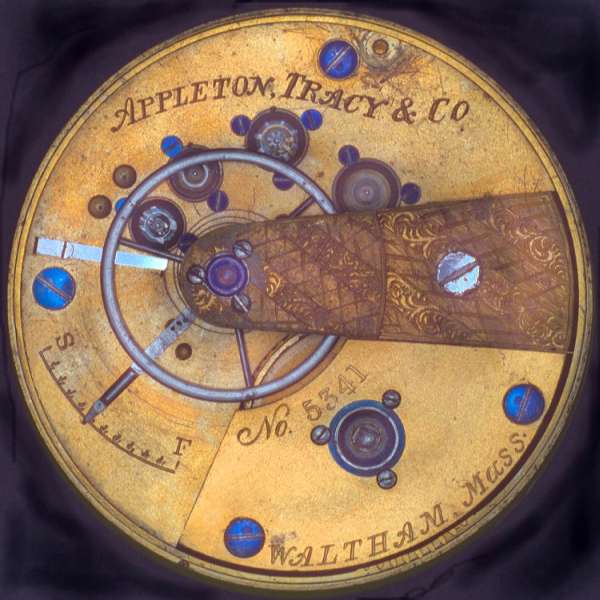
The watch below illustrates perfectly why rarity and age matter so much in collecting. This is an Appleton, Tracy & Co. pocket watch — one of the earliest grades produced at the Waltham factory when the company was still trading under that name (before it became the American Watch Company in 1859). Serial number 5541 places this movement among the first few thousand watches to leave the Waltham factory.
The Studebaker — A Collector Favourite
Pocket watch collecting offers many sub-categories to explore. Some Notre Dame fans and Studebaker car enthusiasts are avid collectors of the Studebaker pocket watch, made in South Bend, Indiana, by the same company that made the cars. These watches can sell for $1,200 to $1,500 and the price keeps rising — fewer than 3,000 are known to exist.
Getting Started
The best advice for a new collector is to buy a good reference book before spending money on watches. The Complete Price Guide to Watches by Cooksey Shugart is the definitive reference, listing over 10,000 watches with 8,000 illustrations.
Next, study the eBay completed listings for the type of watch you're interested in. After a few weeks of watching prices you'll quickly develop a feel for fair market value.