
The Ball Pocket Watch Company
The Ball Pocket Watch Company played a vital part in the safety of the American railroads.
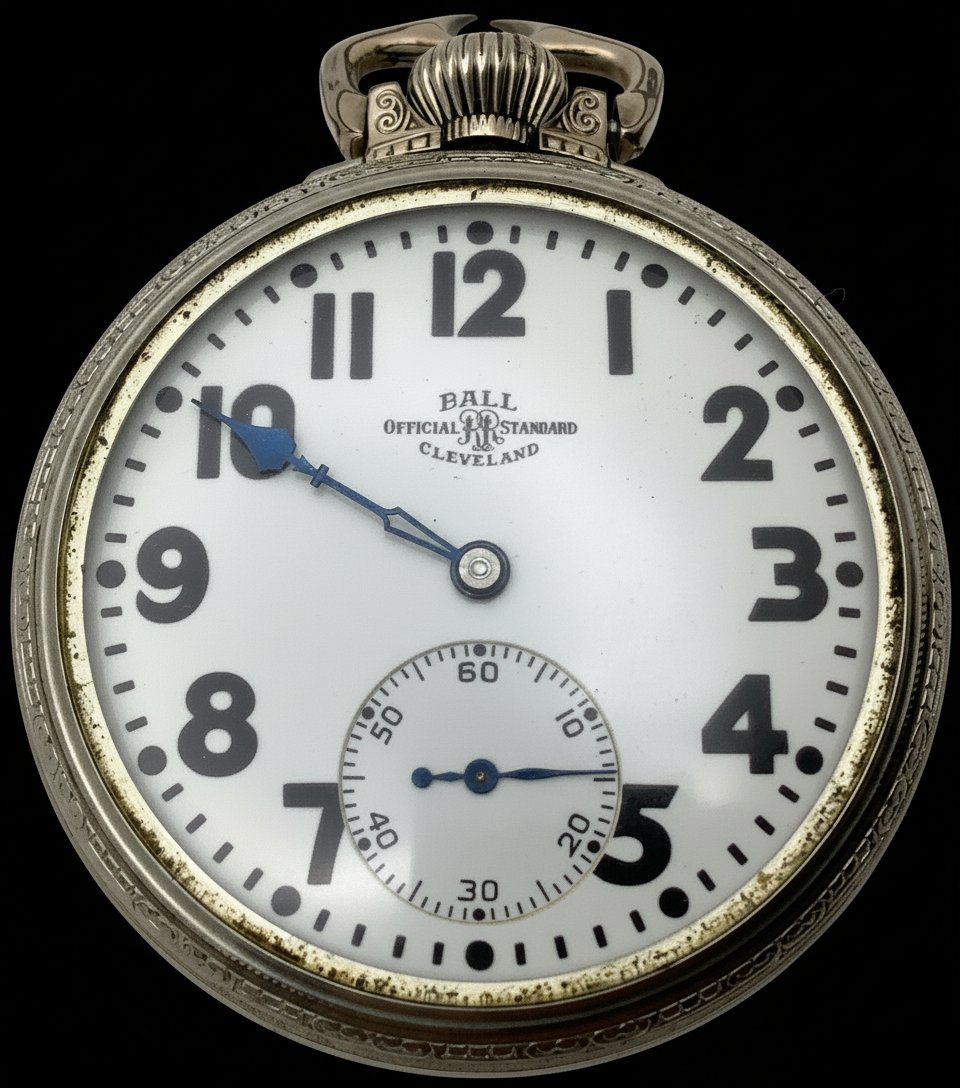
The Ball Watch Company was formed in 1879 in Cleveland, Ohio. Widely acknowledged for their role in developing the specifications for the Railroad Pocket Watch, the company did not actually produce any pocket watches of its own. After the horrific railroad crash at Kipton, Ohio in 1891, Mr. Webb C. Ball was commissioned and given the responsibility of producing standards for the measurement of employees' pocket watches throughout the railroad network.
The General Railroad Timepiece Standards
When these standards were developed, most manufacturers of the time adopted them and produced watches specifically for use on the railroad. The standards were known as the General Railroad Timepiece Standards and included:
- Must be open-faced
- Size 16 or 18
- Minimum 17 jewels
- Adjusted to at least five positions
- Accurate to within 30 seconds per week
- Temperature adjusted from 34°F to 100°F
- Double roller, steel escape wheel, lever set, regulator, winding stem at 12 o'clock
- Bold black Arabic numerals on a white dial, with black hands
Who Made Ball Watches?
Companies that made Ball-signed watches included Elgin, Hamilton, Howard and Waltham. Although Ball did not produce any movements themselves, they began selling pocket watches in 1893. Unlike other companies of the era, Ball did not sell movements separately from cases — all Ball pocket watches were sold as complete units, though with a choice of dials.
All Ball watches were official railroad standard with 17, 19, 21, or 23 jewels, adjusted to 5 positions, in size 16 or 18, open face.
Collecting Ball Watches
Ball watches are highly collectible due to their direct association with railroad safety history. The 21-jewel Official Standard grades are especially sought after. Because movements were made by major manufacturers to Ball's exacting specifications, the quality is outstanding — many examples found today keep excellent time after more than a century of service.